Video Games as Literature: Essays by Kirsten Rodning: Fallout

Showing posts with label Fallout. Show all posts

The Outer Worlds Explores Space While Grappling with Human Consumption

 After my panel at Momocon back in May, several audience members came up to me and asked if I had yet played The Outer Worlds. A segment of my presentation had been about Fallout: New Vegas, and my fellow gamers wanted to make sure I had played Obsidian's latest game. I hadn't, and though I had heard of the game I surprisingly didn't know that it was developed by Obsidian, or that it was such a similar game to their Fallout entries. I immediately bought the game and started playing, and I am so glad that I did! Though The Outer Worlds seems to have slipped under the radar of much of the online gaming community (perhaps because, like many a Fallout game, the game's initial release was filled with bugs and errors, though these were later fixed with a patch), it is a very fun, well-written entry into the annals of science fiction gaming that asks tough questions about morality and human consumption while endearing the player to the many characters and colonies in Halcyon. 


Image of Parvati from The Outer Worlds fixing an engine.


Like Fallout: New Vegas, The Outer Worlds is set in a future that feels oddly vintage, which draws the player's attention to the cyclical nature of history -- humanity will always be doomed to repeat its mistakes. In the case of The Outer Worlds, humanity's mistake is extreme consumption -- consumption of food, fuel, and other necessities, but also frivolities like clothes and guns. There's even a parody version of the NRA that highlights the modern American urge to own lots and lots of guns (see a short video of this parody interaction here). 


Some reviewers may have felt that the anti-capitalist overtones of the game were too overt and caused the story to drag, but personally I feel that if you want to get a message across, sometimes you have to metaphorically hit your audience over the head with it, and Obsidian does this with side-quests that you really don't have to complete if you don't want to. I promise, it's okay to skip a few side quests. Really.


My favorite part of the game, however, had nothing to do with the overstory about consumption and greed, and instead had everything to do with party member Parvati's sweet, romantic side-story. I want to say it's rare to see a story in a video game about an asexual, homoromantic major character, but that wouldn't exactly be true. The truth is that before The Outer Worlds, I had never seen an asexual, homoromantic major character in a video game. That level of realism and complexity in an LGBTQIA+ character almost never exists in fiction. The only other time I have even read a story about an ace protagonist in a relationship was when I read Claire Kann's Let's Talk About Love. Other books with such characters do exist, but these types of relationships are rarely seen in video game romances. This is no case of queer baiting, in case you were wondering. Parvati very clearly communicates her sexual identity to the player, who then even has the option of telling Parvati that they, too, are asexual. See the below screenshots for examples of conversations about sexuality that the player can have with their companion:


Screenshot text: "That's - well, it's tripped folks up in the past. Folks I thought cared about me for me. What if she's not okay with that? What if she IS, but then, later, she's not?" Player answer: "We have that in common, you know. I'm not interested in physical affection either." Screenshot text: Parvati: "You- you're not? You're like me?" Player: "Well, I'm cooler, but yeah."

Screenshot text: Parvati: "I'm not much interested in... physical stuff. Never have been. Leastways not like other folk seem to be. It's not that I can't? I just don't care for it."

Without spoiling the romantic side story that is Parvati's companion quest, I will say that Parvati and her girlfriend meeting each other, dating, and getting to know one another truly warmed my heart. This may end up being one of my favorite video game moments of all time. 


What were your favorite moments in The Outer Worlds, and which characters warmed your heart? Let me know in the comments!


Please don't forget to follow this blog on Twitter, Instagram, and/or Facebook for updates!


1

Games to Play at the End of the World

Ah yes, the apocalypse, a favorite setting for game developers of all generations. While we waste away in our homes awaiting the end of days, we really should be playing some appropriate games for the situation, don't you think? But appropriate for one person may not be appropriate for another, so I have compiled below two lists for two completely different purposes. The first is a list of games to play if you are preparing to face the apocalypse head-on. The second is a list of games to play if you wish to shut out all bad in the world and ignore the rising flames around you (Yes, this dramatic nature of mine got me into big trouble when I took journalism in high school). You decide which type of game is appropriate for your needs.

Games to Prepare You for the Apocalypse:

Cover image for the game The Last of Us

The obvious first choice for this list is The Last of Us, a game that takes us through the first moments of a deadly pandemic, then shows us what the world looks like approximately 20 years later. We see the perspectives of two protagonists: one is a man who survived those first moments and has continued to survive over the years, and the other is a young girl/growing woman who never knew the world before the pandemic devastated humanity. The Last of Us is a thoughtful look at the events of precisely the type of tragedy the world is currently facing (though it may be a small relief that the dead remain dead in our case). There are moments when the protagonists must navigate still-contaminated areas and need to wear gas masks to protect themselves -- this scene may seem very familiar to modern-day players. By strange coincidence, the sequel is scheduled to release during the current pandemic, though like many other games it may end up being delayed. The Last of Us is available on PS3 and PS4.


When any gamer thinks of the apocalypse, it's very likely they picture a scene from the Fallout series. This series takes place many years after a nuclear apocalypse, meaning that society is ended through war (war never changes) and not through disease, but disease abounds after the destruction of modern society as we know it. By the way, am I the only one who really wants to see a Fallout game set in another country -- not just in America? While the series has often made commentary on American culture and politics specifically, I really want to know what is happening around the world during the events of Fallout. If you want to play Fallout with friends, I hear Fallout 76 has gotten better with recent patches, but if you want to play the best of the series, I recommend Fallout: New Vegas. The Fallout series is available on most major platforms.


A game I have mentioned before and will likely write about again is Bastion, a popular indie title from developer Supergiant Games. Bastion is another game that takes place post-war, but this time there are very few living people left in the vicinity. The hero of the story must find these last survivors and lead them to the Bastion, a place of hope in an otherwise dying world. This game is beautiful and will probably make you cry. Bastion is available on most major platforms.

Promotional image for Fallen London

A trusty game that is a little different from the AAA fare already mentioned is Fallen London, a browser-based game that has spawned two spin-offs: Sunless Sea and Sunless Skies. Fallen London is set in a steampunk world and is a little difficult to describe. The following is a description directly from the developer's website:
Thirty years ago, London was stolen. Now it rests on the shore of the Unterzee, that old dark ocean under the world. Hell is close, immortality is cheap, and the screaming has largely stopped… (Failbetter Games)
This story is apocalyptic in a very -fantasy- sense and makes a decent bridge between escapism and realism for the purposes of this list.

I want to include some "honorable mentions" that have a post-apocalyptic feel but did not otherwise make my list:
Borderlands, a science fiction series that takes place on another planet, yet has a similar setting to other games in the post-apocalyptic genre.
Aladdin, a seemingly straight-forward Disney game with a very popular fan theory that suggests the setting may be post-apocalyptic (read more about the theory here).
The Wasteland Series, a spin-off of sorts from the Fallout series, which I personally haven't played yet and therefore can't review or recommend.

Games to Play When You Want to Block Out the World:

This list is going to be a little more obvious, as there seems to be a genre of games specifically intended to help you ignore the real world. Get ready to do a lot of farming.

Image of the player character from Animal Crossing and Beau, a deer, standing in front of flowers and smiling.

First and foremost, of course, is Nintendo's Animal Crossing franchise. When you wake up in the morning, you immediately start playing Animal Crossing. After catching some fish, planting some flowers, and identifying some fossils, you realize you never went to the bathroom, so you put the game down. On the way to the bathroom you realize it's oddly dark and your clock says it's already after supper time. Your psychiatrist might call this an unhealthy addiction, but gamers call it a day well spent. Animal Crossing is available on every major Nintendo console/handheld since the GameCube.


The next franchise on the list is a little confusing: Harvest Moon/Story of Seasons. The confusing part involves a change in North American publishers which led to a copyright battle over the name "Harvest Moon." I won't be able to tell you which exact games are good and which are the "fake" Natsume games, but fortunately other people have already compiled a list for you (see that list here). The Harvest Moon/Story of Seasons franchise tends to focus more on farming than on any other activity, but you will still find plenty to do! And of course, there are always a variety of bachelors and bachelorettes available and hoping to marry you! The Harvest Moon and Story of Seasons franchise is available on many, many consoles and handheld systems (though most are on Nintendo systems).


The Rune Factory series is essentially a spin-off from the Harvest Moon franchise, but a lot of activities are added to the roster in these games. While you can still farm, Rune Factory adds dungeon crawling, world exploration, and Pokemon-style beast raising. My favorite game in this series is also one of my favorite games of all time: Rune Factory: Tides of Destiny (also known as Rune Factory: Oceans). The Rune Factory series can be found on Nintendo DS, 3DS, Wii, Switch, and PS3!


I'm going to give a brief mention to Stardew Valley, a delightful indie game that is very similar to Rune Factory, but its developer, ConcernedApe, listens to fans and regularly makes improvements to the game! Stardew Valley improves on the Rune Factory formula in several ways, including allowing same sex dating and marriage along with character customization. Stardew Valley is available on most modern platforms.


Last but not least is the old classic, The Sims. While you can have your Sims do some farming, this franchise is more about doing everyday things... like going to the bathroom and remembering to wash your hands. One might think that a game about telling virtual people to use the toilet would get boring very quickly, but somehow that is not the case. I, personally, have spent hours at a time in front of a computer simply micromanaging the minuscule details of my virtual citizens' lives. And in an age of uncertainty, a game about ordinary, every day actions might be just what we need. The Sims franchise can be played on PC, or you can play The Sims 4 on PS4 and X-Box One.
0

The Cthulhu Mythos in Sci-Fi and Fantasy Video Games

     When I was a sophomore in undergraduate school I wrote a ten page paper on the influence of the Cthulhu mythos on popular culture. Since then I have come to realize that the Cthulhu mythos is such an overwhelming force that affects so many aspects of literature and popular culture it cannot be contained to a mere ten pages. While I no longer have a copy of my sophomore paper, I would like to tackle the subject of the Cthulhu mythos again, this time focusing on a few of my favorite games that fall into the genre of Lovecraftian horror or Cthulhu-inspired Sci-Fi and Fantasy.

     In case you're not aware, Cthulhu is a god-monster created by early 20th century author H. P. Lovecraft. Lovecraft created an entirely new mythos revolving around mysterious terrors like Cthulhu, and his works have influenced most modern stories in the sci-fi horror genre. Works of literature, games, and films in this genre are often called Lovecraftian horror, after the man who defined the genre. Genre-forming greats like Dungeons and Dragons and Robert E. Howard (author of Conan the Barbarian) have been heavily influenced by Lovecraft's creations, and thus the genres that these creators influenced have also heavily mirrored aspects of Lovecraft's writing. It makes sense, then, that video games have come to be greatly influenced by the Cthulhu mythos. If you want to know the exact scope of Lovecraft's influence on video games, you need only search for "Cthulhu" in the Steam store to see that there are hundreds of games claiming influence from Lovecraft -- and these are only the most evident PC games available on Steam. The list doesn't even count console-exclusive games.

A sketch of Cthulhu by Lovecraft himself.

     This article will focus on a few of the most interesting Lovecraftian games I have played, many of which have influenced my life as a gamer and as a literary scholar. First on the list are some of the most well-known games by mega-popular game developer and publisher Bethesda. If you're a major fan of Bethesda, you likely know that Bethesda LOVES Lovecraft. The Elder Scrolls games and the Fallout games are littered with references and influences from Lovecraft's work. I first noticed this trend when I played The Elder Scrolls 3: Morrowind over a decade ago. At first the game seems like a vibrant, exciting open world experience for players of all ages. That perception lasts until the first time you encounter an "Ascended Sleeper" -- a Cthulhu-like monster that quite likely will scare the wits out of your low-level character when you first see one in a dungeon. The name for this creature most likely originates from Cthulhu's position in the story Call of Cthulhu as a sleeping monster found beneath the ocean. The primary antagonist of Morrowind is also heavily influenced by Lovecraftian lore. Said antagonist, Dagoth Ur, is based on Robert E. Howard's Dagoth, who in turn is partially based on Cthulhu and other "old gods" created by Lovecraft. Like Cthulhu, Dagoth Ur originally sleeps under a volcano (rather than the ocean), and rises to spread terror across the land.

     The Fallout series is not without numerous references to Lovecraft. These are less evident than the influences found in the Elder Scrolls series, but if you have a basic knowledge of Lovecraft's stories you should be able to spot the references scattered throughout the series. The most obvious reference to Lovecraft is the Dunwich Borers company, which has locations in Fallout 3 and Fallout 4. Dunwich Borers is a play on the title Dunwich Horror, which is a key story in Lovecraft's Cthulhu mythos. When the player enters the Dunwich Borers location in Fallout 4, she is presented with the story of the company that was "mining" the earth as a cover-up for their search for the Lovecraftian creature that they worship. This story is shown through flashbacks and terminal entries. For the full story of the Dunwich Borers in Fallout 4, see the following video.


     Another game that draws heavily from Lovecraft is Sunless Sea, a PC game that is based on the browser-based game entitled Fallen London. The tagline for the game is "Lose your mind. Eat your crew. Die." This tagline shows the deep connection that the game has to Lovecraft through its primary themes: sanity/insanity, oceanic exploration, and the unknown. The horror elements of the game require no introduction, as the first few seconds spent playing the game will give most gamers a serious eerie sensation. Like its predecessor, Fallen London, much of Sunless Sea is text-based, but this does not detract from the horror inherent in the story.

Sunless Sea (Source)

     A list of Lovecraft-inspired games cannot exist without some mention of Eternal Darkness: Sanity's Requiem. This Gamecube exclusive is a cult classic, though many have not heard of it. Like Sunless Sea, Eternal Darkness revolves around a Lovecraftian view of sanity, but this game takes the theme of insanity further in that it actively tries to make the player feel as though she is going insane. While the game does include standard jump scares and other tactics normal to the horror genre, there are other aspects of the game (I won't spoil them here) that the player does not expect. Nintendo patented the sanity meter present in the game (which is much like a health bar, but measures the player character's sanity) before dropping the game's developers from their payroll, thus preventing any other games from utilizing this feature.


     Many other games could merit a mention in this article, but these are a few of the most prominent games in the Lovecraftian horror/sci-fi genre that I have played. Many space-themed games also fit the genre, such as Dead Space and the good and bad games from the Alien/Aliens franchise. Space games are easy to fit into the Lovecraftian horror genre, as Lovecraftian horror hinges on a fear of the unknown, and what is more unknown to modern man than space? All a creator needs to do is add some terrifying aliens, and a Lovecraftian tale has been created almost without even trying. There is also a plethora of table-top games based on Lovecraft; most likely inspired by the mentions of Cthulhu and other Lovecraftian monsters in Dungeons and Dragons.


     What are your favorite Lovecraftian or Cthulhu-inspired games? Is there a glaringly obvious game that I missed? Did I use the word "Lovecraftian" often enough in this article? Feel free to discuss these and more in the comments!

1

Sci-Fi Month GIVEAWAY!


You heard that right, I'm doing a Giveaway! This is my first time doing this, but if all goes smoothly three happy people will end up with video game prizes at the end of the month! So here's what you want to hear: how to enter!

Rules:
  1.  Post this giveaway page to a social media outlet of your choice. To make it easier, you can use the buttons at the bottom of the page. Facebook, Twitter, Instagram, Livejournal -- anything goes.
  2.  Make a comment in the comments section of this post, and name a game or two that you think would fit the theme of video games as literature. If you want, you can give a short explanation about your choice. 
  3.  At the end of your comment, include a link to your social media post. Also provide information that will allow me to contact you (your Twitter, Facebook, etc. will suffice).
  4. Entrant must be age 17 or over AND must either have a Steam account or be willing to make one (the Steam platform can be downloaded for free here). 
  5. Only one entry is allowed per person.


Three winners will be chosen randomly from among the commenters. And here are the prizes!


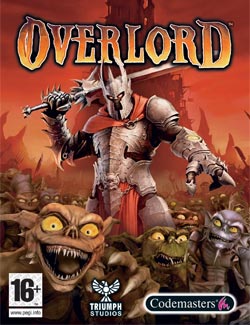
Overlord
Fallout 3
Darksiders

First place winner gets one game of choice, second place chooses from among the remaining two, and third place wins the last game available.

The giveaway ends on the last day of the month.

These games were chosen as the prizes for a number of reasons. Fallout 3, of course, is one of the games I have already discussed on this blog, though there is a good chance I will have more to say about it in the future. Overlord is a great game that parodies the many cliches of the fantasy genre (especially those presented in The Lord of the Rings) -- it's also been called "Evil Pikmin". I don't know if that's a good thing or a bad thing, but it's certainly a thing. Darksiders similarly uses literary influences to tell its own story. Most importantly, (with the possible exception of Overlord) these are all relevant to Sci-Fi Month -- the reason for the Giveaway!


11

Fallout 3 and Fallout New Vegas: The Post-Apocalyptic Middle Earth?

       Originally, I thought I would write on the Elder Scrolls series. Right now that's looking like too huge a task, so I will instead take a look at its post-apocalyptic sibling, Fallout. Fallout (in this case, I will be speaking mostly about Fallout 3 and Fallout: New Vegas) is huge. The world in which this series takes place is a post-nuclear apocalypse United States: specifically what was once Washington D.C. (the Capital Wasteland) and Nevada (New Vegas/ The Mojave Wasteland). While these cities are familiar territory in our time, the Fallout series makes them a whole different world: one in which each character, city, and object has its own deep history and back-story. Some of the history of this world is based in true historical fact -- and the 1940s theme present in the music, dress, and atmosphere of the game leads to an incorrect initial impression that the apocalypse took place during World War II. Instead, the "Great War" took place in 2077 -- several decades in the future. The history of the Fallout alternate world is well thought out and complex. If you visit the timeline compiled on the Fallout Wiki, you can read a long alternate history that is so detailed it seems as though it could be real. The information on the timeline mainly comes from the famed "Fallout Bible" -- a series of documents used by the game's developers to keep track of the world they are creating. Much of the information, however, also comes from clues within the games themselves.

Source: Fallout: New Vegas

For instance, the above picture is a screenshot of a still-working computer that contains journal entries from the day the bombs were launched. All across the large open world found in Fallout players can discover little clues here and there that help tell the overall story of what has happened to this world.
     The deep history of the Fallout world is not the only story present here, though. Many characters, even minor ones, have long histories that players could spend hours discovering. In several of the games, but most notably in "New Vegas," the protagonist picks up followers -- NPCs that can travel with your character. Each of these NPCs has their own quest, which you can only obtain once you have spent time with the characters and gotten to know them.
Source: Fallout: New Vegas

Pictured above is Boone, one of the first potential followers a player will likely encounter in the Mojave Wasteland. His story is rich with drama and hardship -- involving time spent serving in the NCR military, a disastrous event that causes him mild PTSD, and the eventual sale of his wife to Legion slavers by a neighbor. That's a novel's worth of information right there, and this is a character that the player may never even meet while playing the game (he is not involved in the main quest in any way). Boone is just one of many people in the Fallout universe that have detailed back-stories for the player to learn.
     So how does any of this relate to Tolkien and Middle Earth, as the title suggests? Few authors take their work so seriously that they create an entire world in which to set their stories, but both Tolkien and the creators of Fallout have done just that. In both cases, the world was created before the stories that are set there, and the world itself almost seems to be more important than each individual story. Instead of updating the world as the story goes along, Tolkien and the Fallout creators mapped out their worlds almost in their entirety before anything was published. Though Tolkien has died, and all we have left to discover from his world are the few remaining unpublished notes that his family and heirs have yet to unveil to the public, the Fallout universe seems to be alive and well. It will be exciting to see what new stories and information Fallout's creators have to share with us when they finally reveal their next game.

Works Consulted:

"Fallout: New Vegas." dir. Josh Sawyer. Bethesda, 2010. Video Game.
"Great War." Nukapedia. n.d. Web. 13 July 2014. <http://fallout.wikia.com/wiki/Great_War>.
"Timeline." Nukapedia. n.d. Web. 13 July 2014. <http://fallout.wikia.com/wiki/Timeline>. 
3